
Introduction
Mortgage insurance can be a hidden cost in homeownership. Whether you’re a first-time buyer or a seasoned homeowner, knowing how to get rid of mortgage insurance can save you thousands of dollars over the life of your loan.
Mortgage insurance, also known as private mortgage insurance (PMI) for conventional loans or mortgage insurance premium (MIP) for FHA loans, protects lenders if you default on your mortgage. While it can help you qualify for a home with a smaller down payment, continuing to pay mortgage insurance can significantly increase your monthly payments.
In this article, we will explore proven methods to get rid of mortgage insurance, factors that influence its removal, and key tips for homeowners. You’ll also find comparison tables, case examples, and an FAQs section to help you make an informed decision.
What Is Mortgage Insurance?
Mortgage insurance is a policy that protects lenders, not borrowers, if a homeowner defaults on the loan. It’s typically required when your down payment is less than 20% of the home’s purchase price.
Types of Mortgage Insurance
| Loan Type | Insurance Name | Who Pays | Typical Cost |
|---|---|---|---|
| Conventional Loan | Private Mortgage Insurance (PMI) | Borrower | 0.3% – 1.5% of loan amount annually |
| FHA Loan | Mortgage Insurance Premium (MIP) | Borrower | 0.45% – 1.05% annually, plus upfront MIP |
| VA Loan | VA Funding Fee | Borrower | 1.25% – 3.3% one-time fee |
| USDA Loan | USDA Guarantee Fee | Borrower | 1% upfront + 0.35% annual |
Understanding the type of mortgage insurance you are paying is essential to determine the best strategy to get rid of mortgage insurance.
Why Removing Mortgage Insurance Matters
Paying mortgage insurance adds hundreds of dollars to your monthly mortgage payment. For example, on a $300,000 loan with PMI at 1%, you could pay $250 per month solely for insurance. Over a decade, that adds up to $30,000 in extra costs.
By removing mortgage insurance, you can:
- Lower your monthly payments
- Increase your home equity faster
- Have more flexibility in your budget for other financial goals
5 Ways to Get Rid of Mortgage Insurance
1. Reach 20% Equity in Your Home
For conventional loans, mortgage insurance can often be canceled automatically or by request once you reach 20% equity.
Example Table: PMI Removal Based on Equity
| Home Price | Original Loan | 20% Equity Value | PMI Savings Per Month |
|---|---|---|---|
| $300,000 | $270,000 | $60,000 | $225 |
| $400,000 | $360,000 | $80,000 | $300 |
| $500,000 | $450,000 | $100,000 | $375 |
Tip: Ask your lender to provide a written statement confirming that your mortgage insurance can be removed once you meet the 20% threshold.
2. Refinance to a Conventional Loan
If you have an FHA loan, you might be required to pay mortgage insurance for the life of the loan. Refinancing into a conventional mortgage once you have enough equity is an effective way to get rid of mortgage insurance.
Refinancing Considerations Table
| Loan Type Before | Loan Type After | Benefits | Cost Considerations |
|---|---|---|---|
| FHA | Conventional | Eliminates MIP | Closing costs, appraisal |
| Conventional | New Conventional | Lower interest, remove PMI | Closing costs |
Refinancing can also reduce your interest rate, which further decreases monthly payments.
3. Request PMI Cancellation From Your Lender
Conventional loan borrowers have the right under the Homeowners Protection Act to request PMI cancellation once they reach 20% equity. Lenders may require:
- Current home appraisal
- Good payment history
- Evidence that loan is in good standing
This method allows homeowners to get rid of mortgage insurance without refinancing.
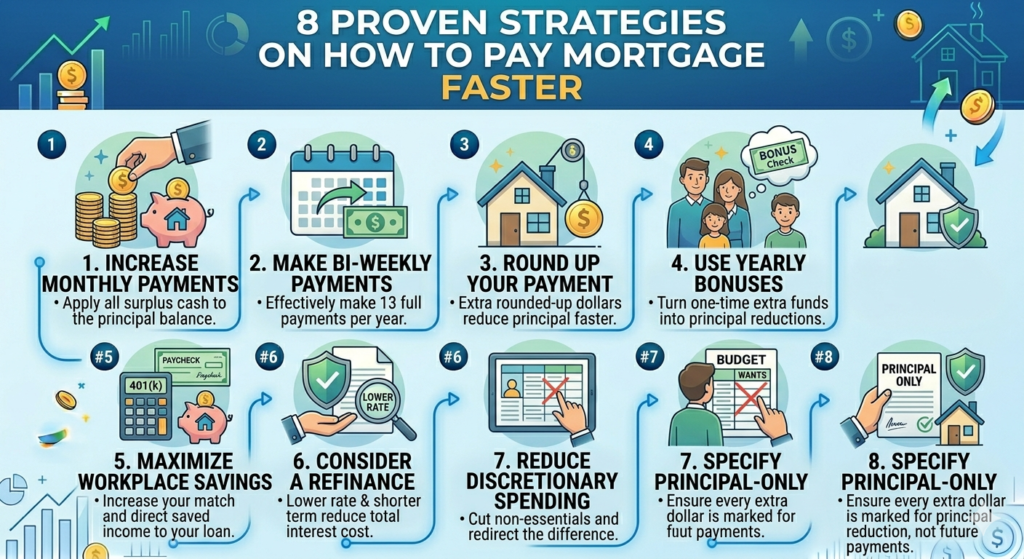
4. Make Extra Principal Payments
Paying extra toward your loan principal accelerates equity growth. By increasing your equity faster, you can reach the 20% threshold sooner and request PMI removal.
Principal Paydown Example Table
| Loan Balance | Extra Payment | Months to Reach 20% Equity | PMI Savings Per Month |
|---|---|---|---|
| $300,000 | $200 | 36 | $225 |
| $300,000 | $400 | 18 | $225 |
| $400,000 | $500 | 24 | $300 |
Even modest additional payments can help homeowners get rid of mortgage insurance years earlier.
5. Wait for Automatic Cancellation
Under federal law, lenders must automatically cancel PMI when your balance reaches 78% of the original home value, as long as your payments are current. While this may take longer than requesting cancellation at 20% equity, it guarantees eventual removal.
Factors That Influence Mortgage Insurance Removal
- Loan Type: Conventional loans offer the easiest path to removal. FHA loans require refinancing.
- Credit Score: Strong credit scores may make lenders more willing to remove PMI.
- Home Value: Appreciation can help you reach 20% equity sooner.
- Payment History: Timely payments increase lender confidence.
Pros and Cons of Removing Mortgage Insurance
| Pros | Cons |
|---|---|
| Lower monthly payments | May require appraisal or fees |
| Faster equity growth | Possible refinancing costs |
| Greater budget flexibility | Potential for loan term extension |
| Improved financial confidence | Lender approval may take time |
FAQs About How to Get Rid of Mortgage Insurance
Q1: Can I remove mortgage insurance if my home value increases?
Yes, if a new appraisal shows you have 20% or more equity, you can request PMI removal.
Q2: How long does it take to automatically remove PMI?
Federal law requires automatic removal at 78% loan-to-value ratio for conventional loans, assuming timely payments.
Q3: Does refinancing always eliminate mortgage insurance?
Not always. Refinancing to a conventional loan with less than 20% equity may still require PMI.
Q4: Can I pay extra to get rid of mortgage insurance faster?
Yes, additional principal payments increase equity and can speed up PMI removal.
Q5: Is mortgage insurance tax-deductible?
Mortgage insurance premiums may be deductible for some taxpayers; consult a tax professional.
Q6: What is the difference between PMI and MIP?
PMI applies to conventional loans, while MIP applies to FHA loans. MIP often lasts longer.
Conclusion
Knowing how to get rid of mortgage insurance is essential for homeowners seeking to save money and accelerate equity growth. Whether through equity growth, refinancing, or requesting lender cancellation, each strategy offers a path to lower payments and increased financial flexibility.
By carefully planning your mortgage payments, monitoring home value, and understanding your loan terms, you can successfully eliminate mortgage insurance and optimize your homeownership costs.